

Selfish Spirituality
- Michael
- Oct 11, 2024
- 5 min read
Is our Spirituality more selfish than we realise?
I have begun really looking at this recently. There is a lot of focus on our personal relationship with God. Knowing God, hearing from God, worshipping God etc etc. It is all largely very individualistic-which reflects our culture. It is about the individuals journey of faith and, to be fair, it is so important to grow and develop this. But really, where the real test comes is this: Does all of our individualism and personal growth and all the rest lead us to love others?
Ultimately, love is so core to our faith. We are taught to love our enemies and pray for them, we are told that love is the first mentioned fruit of the Spirit. One of Jesus' commands to his disciples is 'love one another' (John 13:34-35). But there is more, love is the fulfilment of the law (Romans 13:10), the end goal of growth in faith is love (2 Peter 1v8), love was part of the early church where they shared everything and made sure no one went without who were part of the believers (Acts 2:44-45). Along with a significant number of 'one another' teachings in the NT (take some time out and do a little study on that phrase and see what I mean) and we see that a huge amount of what being believers means, the growth that we are to experience and demonstrate to the world is based on how we treat and relate to one another.
Look back at John 13:34-35 and also Jesus's prayer in John 17 especially verse 21. According to these scriptures how we treat and relate to each other is a key and arguably essential part of our witness to the world. Loving one another and unity with each other glorifies Jesus to the world (logically it implies that the absence of love and unity would also do the opposite-which is a sobering thought!).
But I believe that with such high input from an individualistic culture, which has permeated the western church, our Spirituality can actually become, without meaning to, selfish. It becomes about what I can do, what I can achieve, my walk with God, the books I've read, how I feel, what I have experienced of God and on and on. But when we look at scripture growth and maturity is actually incredibly practical. Loving one another, looking after one another, building each other up, providing for each other, teaching and admonishing one another in love.
To take this even further we can look at the parable of the sheep and the goats in Matthew 25:31-46. Jesus' main criticism of the goats was that they did not meet the needs of believers. Those who were thirsty, hungry, naked, sick and in prison and being a stranger. The result of the goats apparent faith was seriously lacking. This then strongly links to James' well quoted passage on faith and deeds. 'If someone says he has faith but has does not have works? Can faith save him?' (James 2:14). The example he then gives is not some super spiritual act or experience but rather a simple example where all that was needed was looking after their physical needs, warmth and food. Do you see the connection between that and the sheep and goats?
I have been to churches where I have had to force myself to feel welcomed, i.e. I greet people and engage with people like I've been at the church for years. I have been in personal circumstances where myself and my wife and been really struggling financially and some people have been just like James 2 'I'll pray for you' then head off on their 3rd luxury holiday of the year (nothing wrong with a holiday in itself, but neglecting fellow believers in the process is sinful). I've been in places where even after a year or more, getting to know others has taken lot of work and where there still continues to be a lack of inclusion even with people you see every week (which can often happen in larger churches as it is easy for people to get missed, which is why extra vigilance is needed).
I have also known others who have given without any expectation of being repaid, people who have visited in times of need when all you need is company and a friendly face. But these things really make you think when you come back to scripture. People who worship, praise, pray and study scripture to their hearts content then turn out to be unhelpful and judgmental and go back to trying to experience God and read their Bibles. This is selfish Spirituality.
There are so many different ways love and its absence can be expressed, but I think it is so easy to get caught up in individualistic Spirituality without realising it when what God wants is a loving community of God's people living as family where no one goes without, where every believer will be welcomed and included, looked after and fought for. Where basic human needs will never go unmet, even in the relatively wealthy western countries there is still poverty, but also loneliness, sickness and isolation.
So, let's be careful and mindful of the Biblical message of loving one another and what that looks like in your situation. What needs are there in the church? What individuals might be lonely, need support, physically naked but also emotionally vulnerable? Who needs to be included?
It can be hard as we also have a culture where people are not always vulnerable and open up about things. However, as we grow we can encourage a culture of openness and vulnerability with these types of issues because we can learn that we are part of a loving community of God's people. A community that is empowered by Christ himself following his word and command to love one another and through this, live as witnesses to him to the world around us in the way and for the reason Jesus purposed-love and unity.
Let us seek God, and know him personally, experience him intimately, study his word, but we must avoid the illusion that this is the highest form of Christianity. We need to allow that personal individual aspect grow into loving others or it can become selfish spirituality. Without growing in loving one another in real observable ways, being witnesses to the world of the reality of Christ, then I would argue that we are not growing at all. As James writes, 'do not merely listen to the word, and so deceive yourselves. Do what it says.' (James 1:22 NIV 1984),
Jesus, the word of God, says love one another.

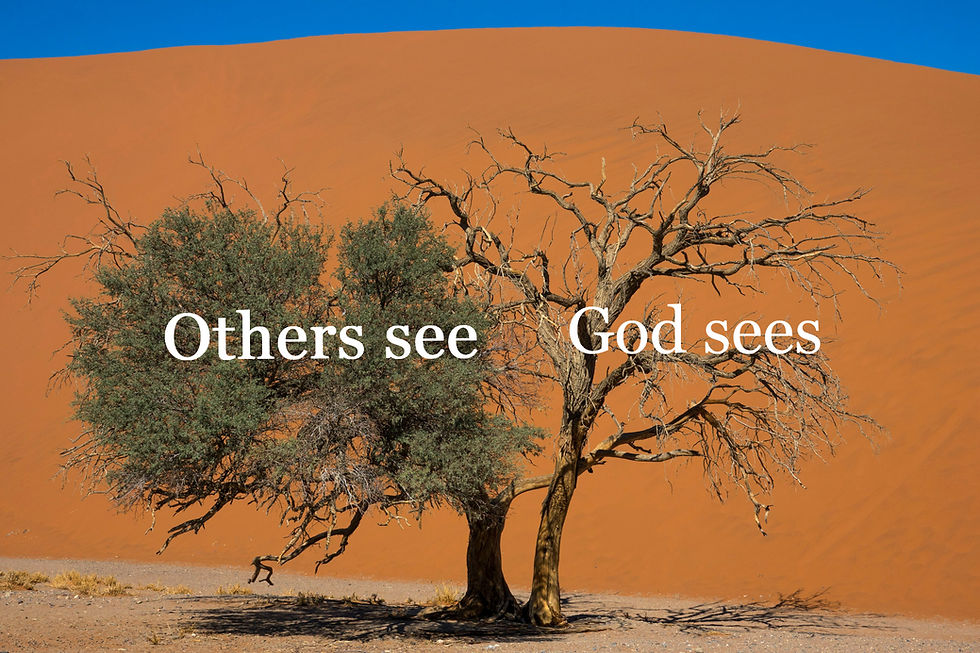

It seems good to give out of your excess if you can, whether money, talent or time. Unfortunately our human love and good works are as 'filthy rags' as it says in Isaiah, compared to Christ sacrificial life in us.
Christians need to download Gods love into their hearts and this takes devotion, worship, prayers and time. Without this attention and friendship with Jesus, you risk acting within the limitations of just being a 'good person' like so many others - one who goes by nominal Christianity rather flowing out of Gods love and power, acting out of an overflow which pours out of you. Of course this takes some organisation and intention but also listening to the Lord, as…